
Transaction Import
Churches have been hesitant to move from their current church management systems to Pushpay due to the amount of manual work required to move past transaction and accounts data. Moving this data without care could result in loss of important recurring transaction history to keep donations coming in and lose valuable donation income for the business.
Transaction Import is a data migration feature designed for Pushpay's administration platform for new onboarding businesses to Pushpay. In this project, I led the final responsive UI Design and built multiple UXPin prototypes while our user research team led the user testing process.
Design solution
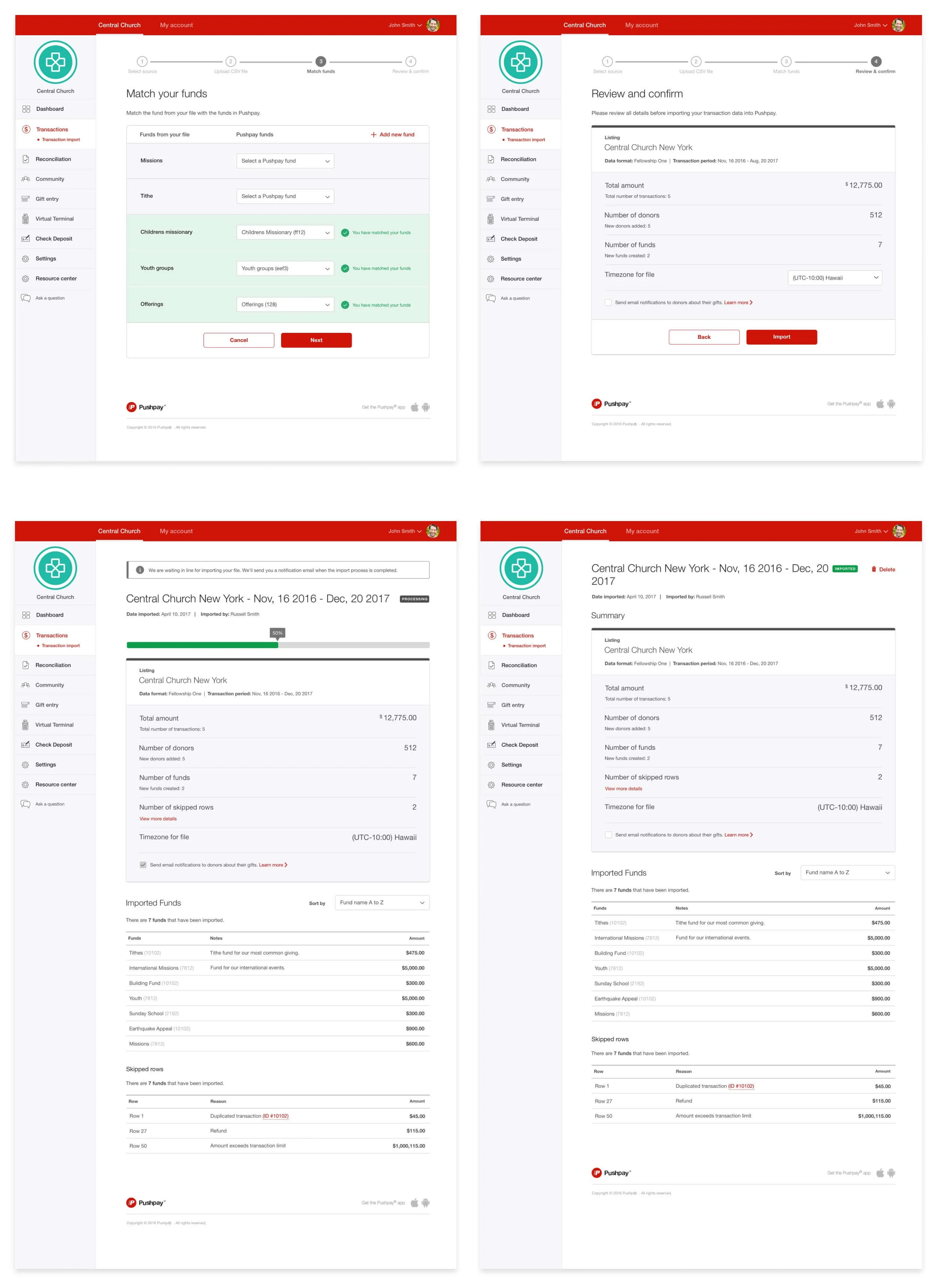
To reduce the manual effort of migrating transaction data and address concerns about data loss, we designed a new import feature for churches switching to Pushpay.


Prototyping and User Testing
I worked on the high-fidelity prototype for user-testing. The UXPin prototype was taken through user-testing sessions by my design lead with both internal stakeholders and external customers using the product.
Throughout user testing, there were many common patterns found including:
The majority of users mentioned they would feel more confident in the feature if they had help articles and guides close by
Users felt unsure what to upload without tooltips to provide more context
Users wanted to view past imported data history for account records
Over half of the users wanted to be able to alert imported church givers their transaction data had been imported into Pushpay
UX Pin prototype

Design System
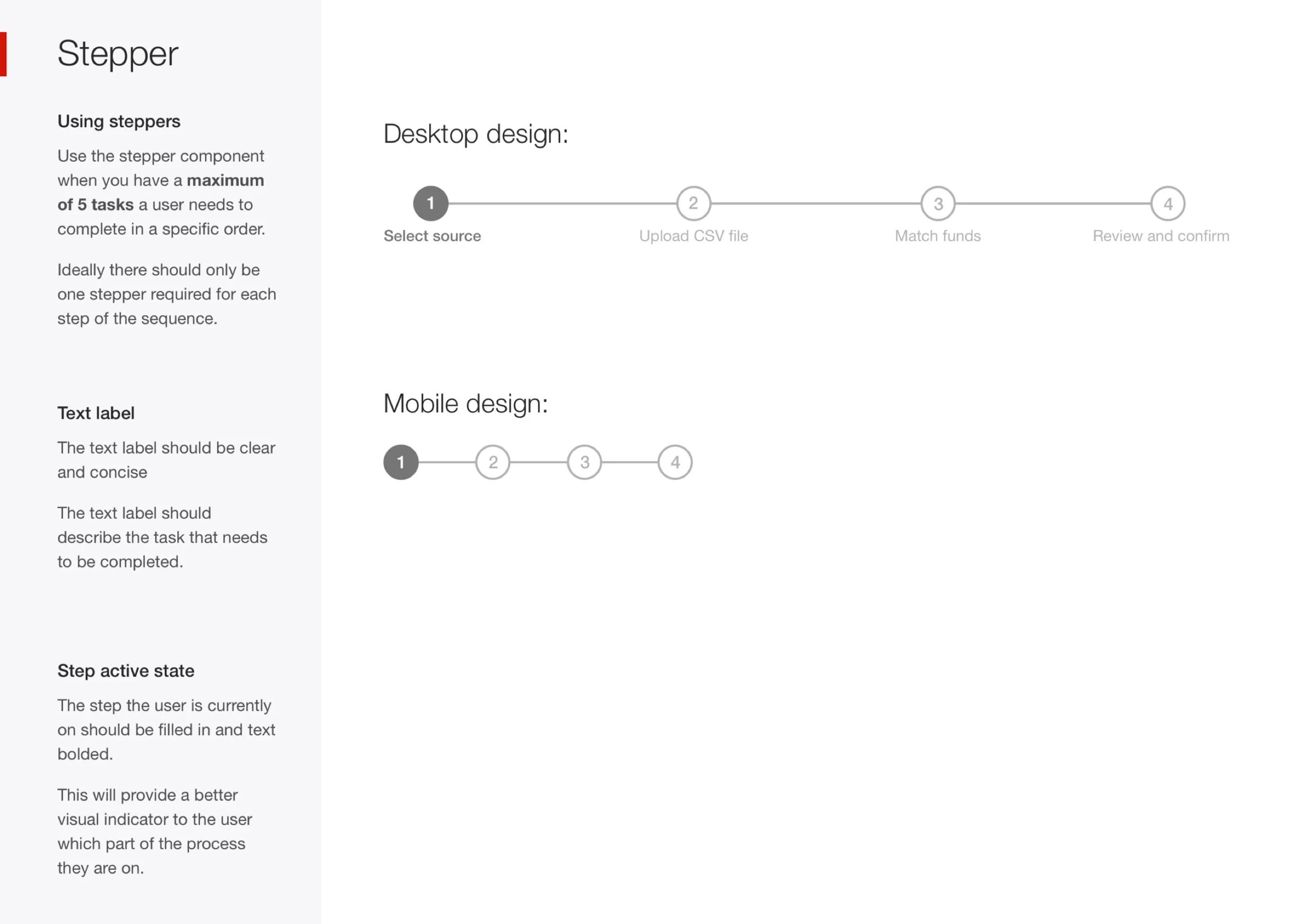
I used existing design system components to maintain visual consistency across the platform. When new components were needed, I collaborated with both the project team and wider design team to keep them aligned with existing patterns.


The challenge when designing for new users
Due to our target audience being new to Pushpay’s administration software, it was vital to get communication right when data was not in the correct format or what stage the system was at when uploading important data. Without getting this right, users would be given the wrong impression of Pushpay being unreliable and cost them many hours of manual uploading if misunderstood.
To overcome this challenge, I worked closely with my design lead to identify key stages in the users work-flow to communicate more on what the system is doing and if there is any action needed.
Stages in the workflow we identified where we needed to improve the communication for new users included:
When a user lands on the feature, they should be given instructions on what needed to be done beforehand to avoid confusion
As information is finalised and being imported into Pushpay, it was important to communicate to users they were not required to complete any other actions
When certain pieces of data are skipped from the importing process due to instances like duplication, users needed to be made aware on the reasons why they were skipped
Outcome
The feature was launched in October 2017 and to date, the feature successfully imported over 500,000 transactions and 1,000+ accounts into Pushpay.